

What Advocacy Really Means
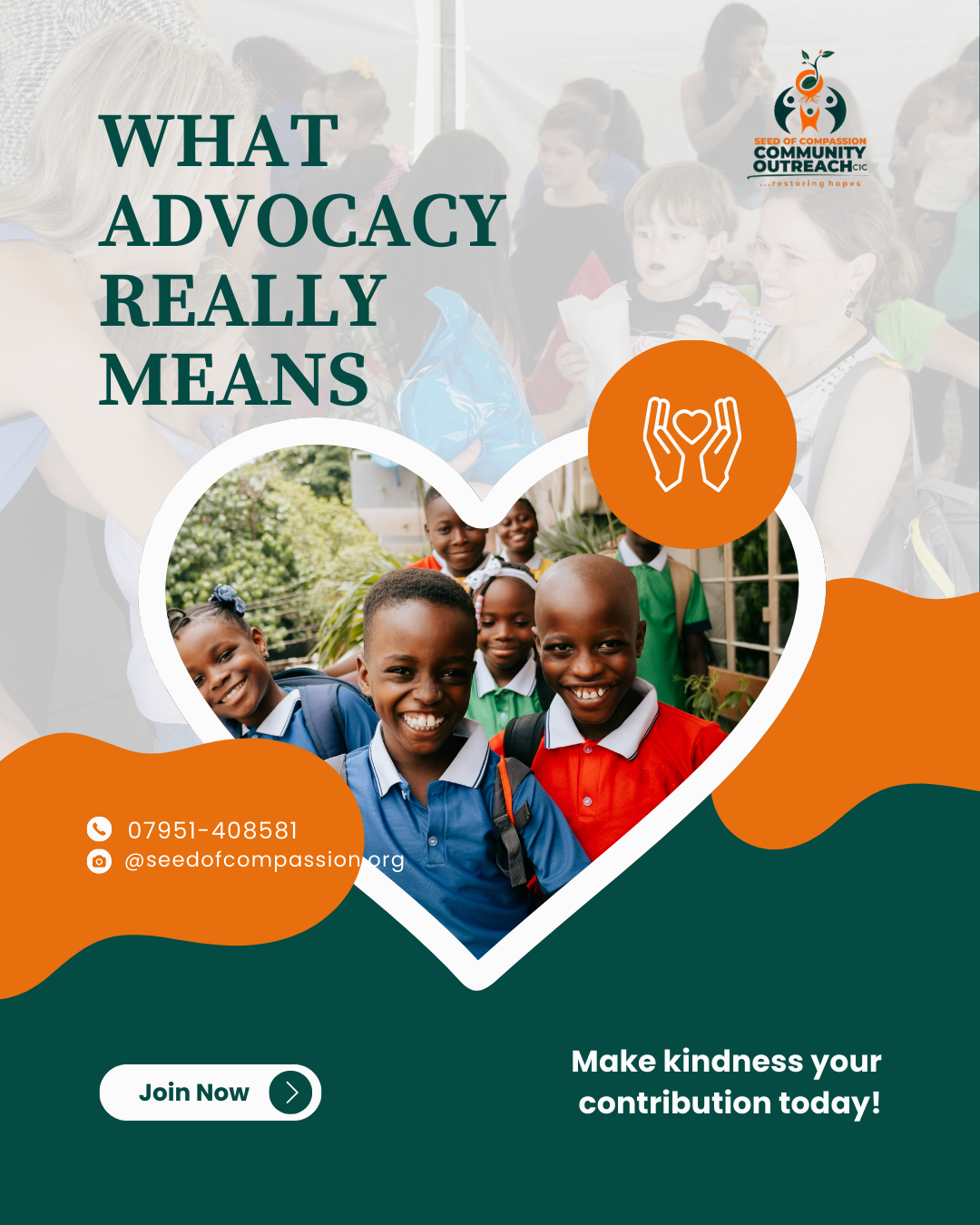
What Advocacy Really Means
Advocacy is often misunderstood.
To many people, the word immediately brings to mind loud protests, political activism, or public figures taking strong positions on social issues. While advocacy can include these expressions, it is not limited to them. In truth, advocacy is far more personal, far more accessible, and far more powerful than many people realize.
At its core, advocacy is the act of speaking up, standing in the gap, and taking responsibility when silence would cause harm. It is rooted in compassion, driven by empathy, and sustained by the belief that every human life carries dignity and worth.
What Is Advocacy?
Advocacy is the intentional effort to support, protect, or defend people, causes, or communities that may not have the power, voice, or platform to speak for themselves. It involves raising awareness, challenging injustice, and influencing positive change, whether on a small, personal scale or a broader societal level.
Advocacy does not require a title, a large audience, or a public platform. It begins with awareness and grows through action. Sometimes, advocacy looks like speaking up. Other times, it looks like listening, supporting, or refusing to look away.
Why Advocacy Matters
Silence often allows harm to continue unchecked.
When systems fail, when vulnerable people are ignored, or when injustice becomes normalized, advocacy becomes a moral responsibility. Advocacy matters because it brings attention to issues that would otherwise remain unseen. It creates pressure for change, encourages accountability, and reminds society that people are more than statistics or stories that fade with time.
At SoCCO, we believe that compassion must move beyond emotion. Compassion that does not lead to action, protection, or responsibility is incomplete. Advocacy transforms compassion into something practical, visible, and impactful.
Who Advocacy Protects
Advocacy exists to protect the vulnerable; children, displaced persons, marginalized communities, and individuals whose voices are often dismissed or overlooked. It protects dignity. It affirms humanity. It says, “You matter, and your story deserves to be heard.”
But advocacy also protects society as a whole. When we defend dignity and justice for the most vulnerable, we strengthen the moral fabric of our communities and create safer, more humane systems for everyone.
How Everyday People Can Advocate
Advocacy is not reserved for activists or organizations alone. Everyday people advocate when they:
-
Speak up against injustice, even in small spaces
-
Share accurate information and raise awareness
-
Support causes through time, skills, or resources
-
Stand with those who are hurting or excluded
-
Choose action over indifference
Advocacy begins with awareness but becomes powerful when it is informed, intentional, and sustained.
Advocacy at SoCCO
At SoCCO, advocacy means more than words. It means:
-
Raising awareness responsibly
-
Protecting dignity at every level
-
Influencing positive and lasting change
-
Standing in the gap for those who cannot
We believe that compassion becomes powerful when it is informed, and hope becomes effective when it is backed by action.
Advocacy is not about being loud. It is about being faithful; faithful to humanity, faithful to justice, and faithful to the responsibility we carry to one another.
If you believe compassion should lead to action, then advocacy is not optional. It is a calling.